

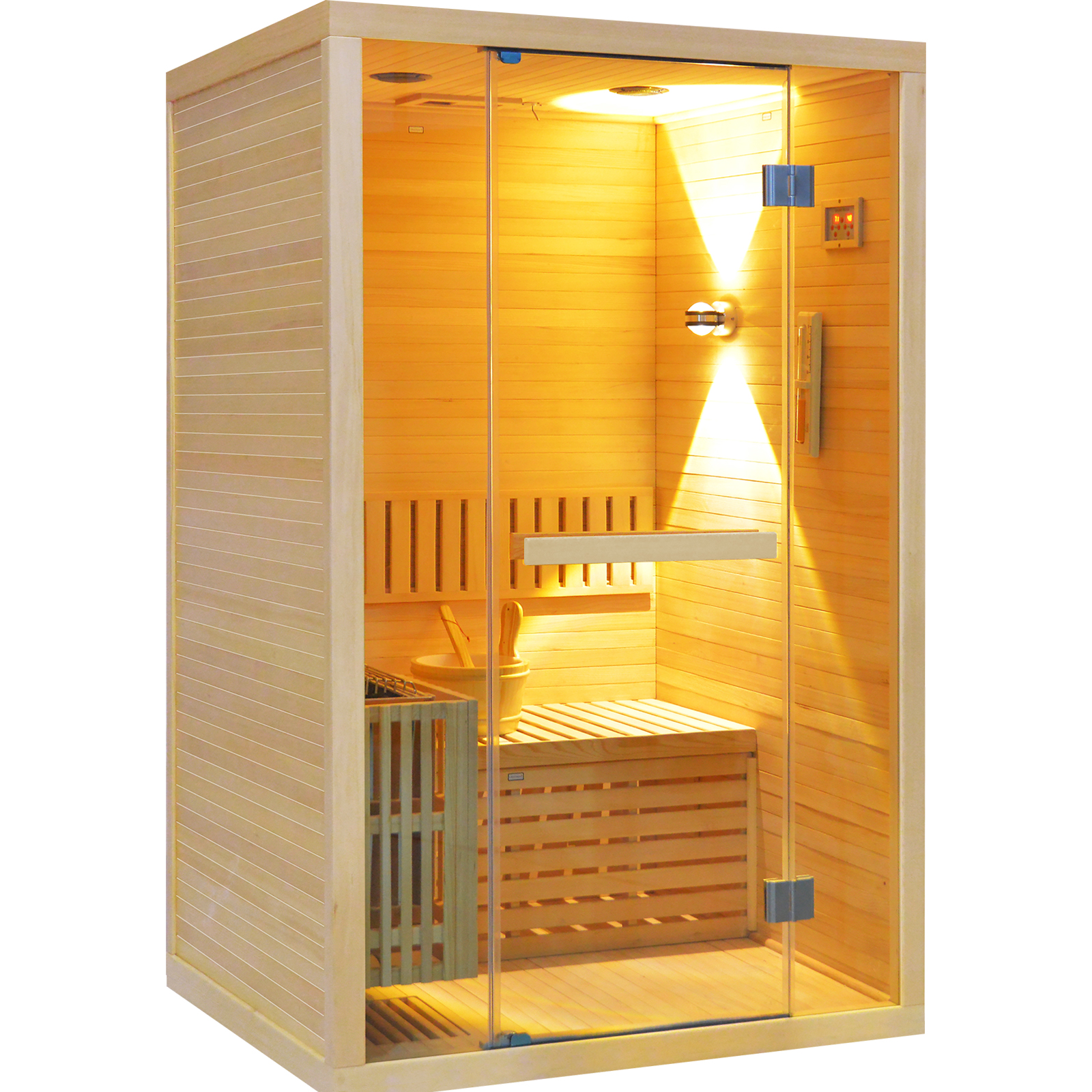
Do not choose a sauna connection from its size or heating type alone. In the current MAJUS catalog, HF1 is listed at 1,350W and 120V, while HY8 is listed at 3,000W and 240V. Confirm the delivered model’s rating label, installation manual and local electrical requirements before purchase; these listing values do not specify a breaker, cable or outlet.
1. Start with the exact model
| Model/listing | Listed supply | Listed power | Intended capacity |
|---|---|---|---|
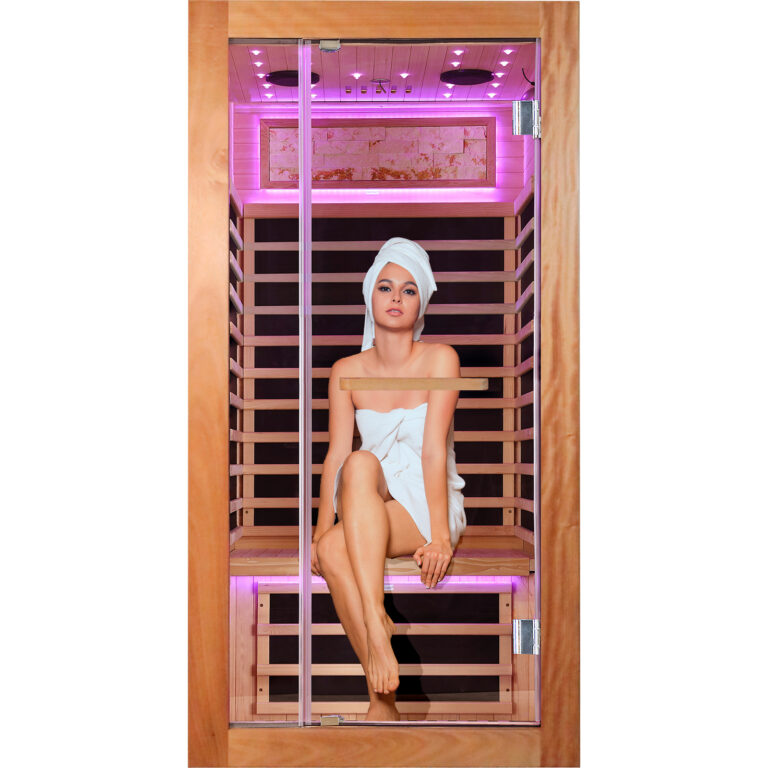
| HF1 infrared sauna | 120V | 1,350W | 1 person |
| 1200W infrared sauna | 120V | 1,200W | 1 person |
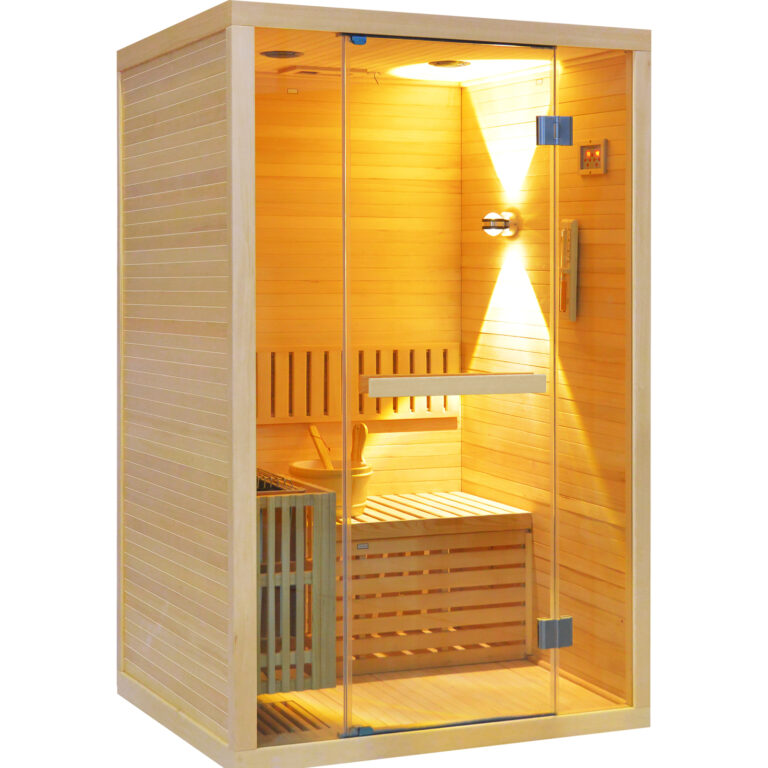
| HY8 traditional sauna | 240V | 3,000W | 2 people |
Catalog checked October 4, 2026. “Plug-and-play” wording in a listing does not confirm that your existing outlet and circuit are suitable. Ask for the plug specification and manual for the exact unit sold in your destination market.
- Record the model code and voltage shown on the supplier’s current specification sheet.
- Confirm whether the stated power covers the heater only or the entire unit.
- Ask whether the unit uses a plug connection or requires another connection arrangement.
- Give the actual manual to your installer before work is quoted.
2. Understand power without guessing installation requirements
One kilowatt equals 1,000 watts, so a listed 3kW heater has a rated power of 3,000W. That conversion helps compare catalog entries, but it is not a circuit-sizing instruction.
For an illustrative energy calculation only, a device drawing 1.35kW continuously for 1 hour uses 1.35kWh. At an assumed tariff of $0.20 per kWh, that equals $0.27. A continuous 3kW draw for the same hour equals 3kWh and $0.60 at that assumed tariff. These are arithmetic examples, not measured MAJUS session costs. Preheating, thermostat cycling, other components and actual tariffs change the result.
3. Ask these questions before you order
- Can you provide the exact model’s installation manual and a photograph of its electrical rating label?
- What connection and dedicated-circuit requirements does that manual specify?
- What electrical documentation is available for my destination market?
- Does the proposed room meet the model’s ventilation, clearance and floor requirements?
- Are installation work and delivery services included in the quoted price?
Can I use another model’s wiring instructions?
No. Two cabins with similar capacity can have different heaters and electrical requirements. Use the documentation for the delivered model and have a qualified local installer assess the installation.
Does 120V mean lower operating cost?
No. Voltage does not by itself determine energy use. Compare actual consumption over the same operating period and conditions, then apply your own tariff.
Send your available room dimensions, intended user count and installation country through our contact page or website chat. Ask for the manual and specification sheet for the exact model before ordering.
Use a destination-market configuration record
Distributors should keep one configuration record per model and market. Record the model code, heating method, rated voltage, rated power, connection information, manual revision, label artwork and the person who approved the configuration. This makes a 120V infrared listing distinguishable from a 240V traditional listing when products are shown together in a catalog.
Before an order is released, ask the factory to confirm which values apply to the supplied configuration. Keep the answer with the quotation and pass the same documents to the installer and sales team. This creates a traceable information chain without turning a catalog number into an electrical installation instruction.