

How long should you stay in a sauna? Keep the session brief, leave immediately if you feel unwell, and follow your sauna’s instructions and any advice from your clinician. Harvard Health recommends staying no more than 15–20 minutes as a general precaution. That is a limit, not a target: a beginner, someone sensitive to heat, or anyone using a hotter cabin may need to stop much sooner.
A home sauna should fit your comfort and daily routine. You do not need to reach a particular number of minutes, sweat heavily, or stay until the timer ends to make a session worthwhile. This guide explains how to plan a short session, compare traditional and infrared heat, and recognize when it is time to leave.
General educational information, not personalized medical advice. This guide is published by Majusaccessory, a sauna seller, and has not been medically reviewed.
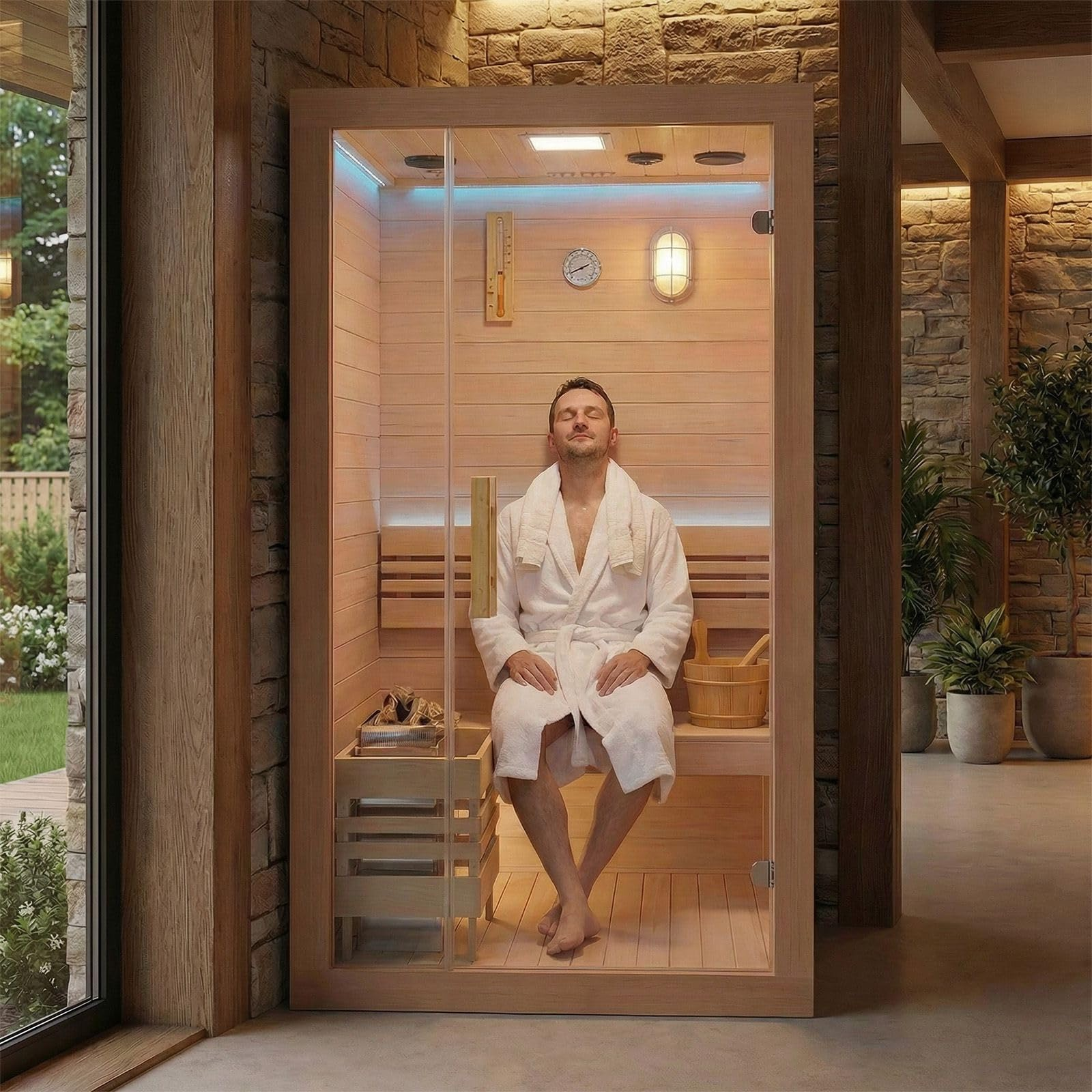
How long should you stay in a sauna as a beginner?
The first visit is an opportunity to learn how your body responds to heat, not a test of endurance. Do not start by trying to reach the maximum session length. If you have never used a sauna, choose a brief initial exposure, keep the exit accessible and leave before you become uncomfortable. Ask a clinician about suitability if your health or medication makes heat exposure uncertain.
- Read the operating manual before heating the cabin.
- Start only when you feel well and are not dehydrated.
- Use a timer as a reminder to reassess, rather than a challenge to finish.
- Leave sooner if the temperature feels excessive or your body signals discomfort.
- Cool down gradually and drink water afterward; follow your medical advice if you have a fluid restriction.
Harvard’s general advice is to limit sauna stays to no more than 15–20 minutes. The recommendation does not establish that 20 minutes is safe for every person or every sauna. Temperature, humidity, health, medications and previous heat exposure all matter.
Traditional sauna vs infrared sauna: does the time change?
Traditional and infrared saunas deliver heat differently. A traditional sauna heats the room through a heater; an infrared cabin uses radiant heating panels. The air temperature alone is not a reliable way to decide how long you can remain inside. Read the guidance for the particular model and pay attention to how you feel throughout the session.
| Question | Traditional sauna | Infrared sauna |
|---|---|---|
| What should set the session length? | The manual, actual heat conditions, your comfort and medical advice. | The manual, heat exposure, your comfort and medical advice. |
| Can lower air temperature justify a longer session? | Do not extend exposure simply to reach a timer setting. | Do not assume lower air temperature makes prolonged exposure safe. |
| When should you leave? | Immediately if you feel unwell. | Immediately if you feel unwell. |
If your search is “infrared sauna how long” or “infrared sauna how long should I stay in,” the useful answer is model-specific and personal. A generic long-session recommendation from another website should not override your manual or clinician’s guidance. Our infrared vs traditional home sauna guide explains the equipment differences to consider before buying.
Sauna benefits: why more minutes are not the goal
People searching for infrared sauna benefits or steam sauna benefits often want a relaxing routine at home. Those searches should not lead to a promise that staying longer delivers greater benefits. A comfortable, manageable routine is more practical than pushing through heat to hit a number.
Keep the terminology clear when comparing products: a traditional sauna cabin is not the same as a dedicated steam room. Do not pour water on an infrared heater or any component that is not designed for it. With a traditional heater, use water only when the heater manufacturer expressly permits it and follow its directions.
- Do not use sweat volume as a measure of success.
- Do not treat sauna use as a guaranteed weight-loss or “detox” treatment.
- Do not add extra rounds just to compensate for a short first session.
- Do not assume a larger or more powerful heater means you should stay longer.
Three practical home sauna scenarios
“I want a quiet break after work.”
Prepare water, a towel and a place to sit while cooling down before you enter. Keep the session short enough that it fits comfortably into your evening. Set a reminder, but leave earlier if needed. Avoid combining your sauna session with alcohol.
“I want to use the sauna after exercising.”
Do not immediately add more heat when you are already overheated, dizzy or dehydrated. Recover first and skip the sauna if you feel unwell. A hard workout is not a reason to force an extra-long session. Get individualized advice if you are unsure how to combine exercise and heat exposure.
“My partner and I will share a two-person sauna.”
Two seats do not mean two people have the same heat tolerance. Each person should be able to leave independently without pressure to complete a shared timer. If one person exits early, that is a normal adjustment, not a failed session. See our one-person vs two-person sauna space guide for layout considerations.
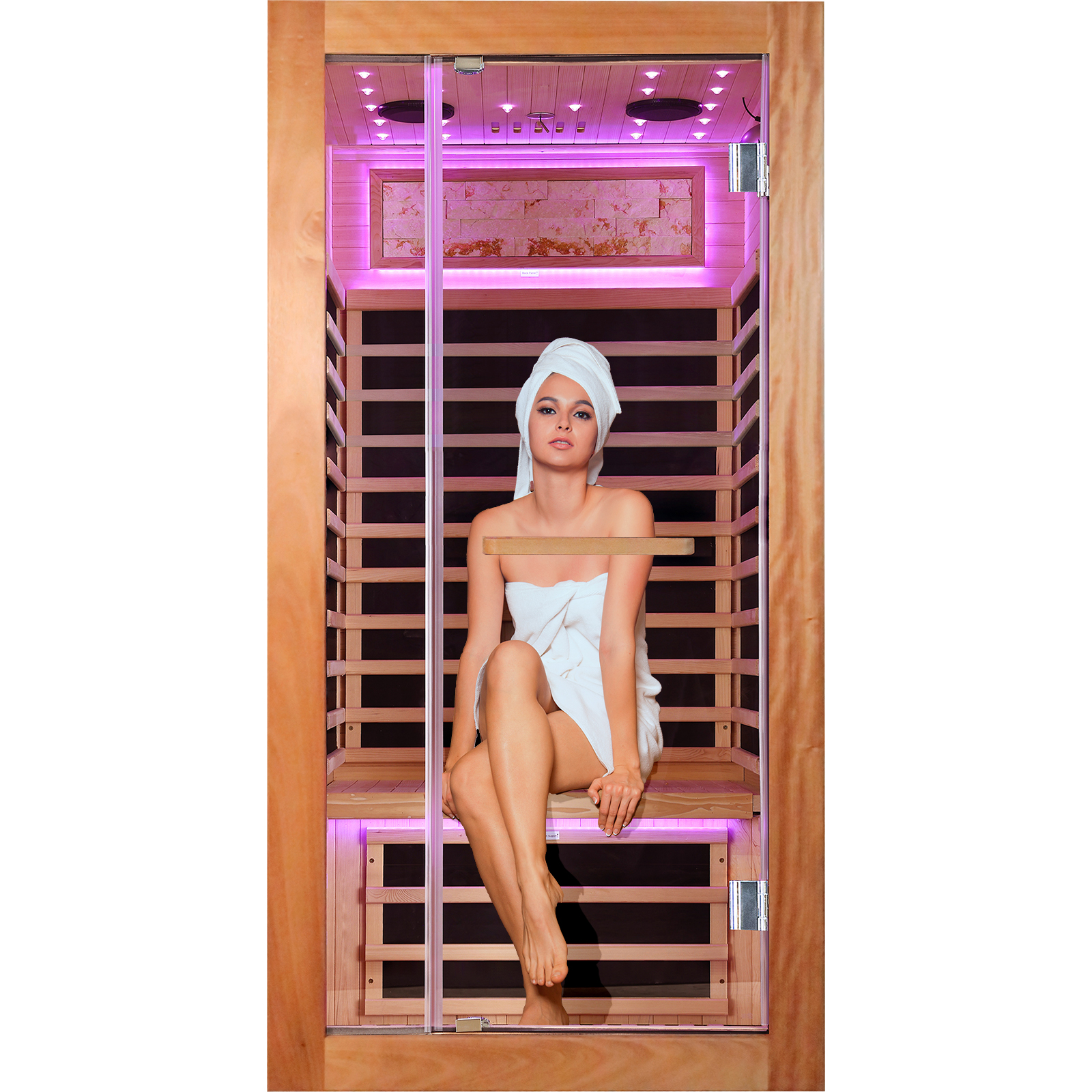
When should you leave a sauna immediately?
Leave immediately if you feel dizzy, nauseated, weak, unusually uncomfortable or otherwise unwell. Do not wait for the timer. Move to a cooler place and seek medical help if symptoms persist or are severe. Chest pain, fainting, confusion or difficulty breathing need urgent medical attention.
Harvard advises people with heart disease or uncontrolled high blood pressure to consult their doctors before sauna use. Ask about sauna suitability if you take medication that can affect sweating, hydration or your response to heat. Avoid a session when you are ill, and avoid alcohol before and after sauna use.
Choosing a sauna for a house: comfort before the timer
If you are planning a sauna inside a house, choosing the right cabin involves more than session duration. Consider the available floor space, ventilation requirements, power supply, door clearance and safe access. Follow the installation instructions and have electrical suitability checked by a qualified professional where needed.
For buyers comparing an infrared sauna home setup with a traditional home sauna, start with the heating method and installation requirements. A smaller cabin can suit a personal routine; a two-person cabin adds seating flexibility. Neither changes the need to stop when you feel unwell.
- View the Majusaccessory 1500W one-person traditional sauna for a personal home setup.
- View the Majusaccessory 3000W two-person traditional sauna for shared seating.
- Check home sauna voltage and power requirements before ordering.
These are product choices, not medical recommendations. Confirm the current specifications, installation conditions and operating instructions on the product page and with Majusaccessory before purchase.
Frequently asked questions
Is 20 minutes in a sauna always safe?
No. Harvard’s 15–20-minute precaution is a general upper limit, not a guarantee of safety or a goal for every user. You may need a much shorter session or may need to avoid sauna use based on your health and clinical advice.
Can I stay longer in an infrared sauna because it feels less hot?
Do not assume that you can. Lower air temperature does not remove heat stress. Follow the model’s manual, keep sessions conservative and leave if you feel unwell.
Should I stay until I start sweating?
No. Sweating is not a timer or a performance goal. Do not extend your stay simply because you have not sweated as much as someone else.
Can I do another round immediately?
Do not treat a short break as a reset of your heat exposure. Cool down gradually, reassess how you feel and avoid adding rounds to reach a total-minute target. Ask a clinician if you need advice about repeated sessions.
Does a two-person sauna require a longer warm-up or session?
Warm-up depends on the equipment and conditions; consult the manual. Warm-up time and the time you spend inside are different. Cabin capacity does not determine a safe session length.
Plan a home sauna routine you can use comfortably
Keep the session brief, use your body’s response rather than a countdown as the final signal, and leave immediately if you feel unwell. When you are ready to choose a home sauna, contact Majusaccessory with your room dimensions, seating needs and available electrical supply so we can help you compare suitable models.
Source
Harvard Health Publishing: Saunas and your health — general time-limit and safety precautions. Source checked October 14, 2026. The routine examples above are practical planning examples, not clinical protocols.